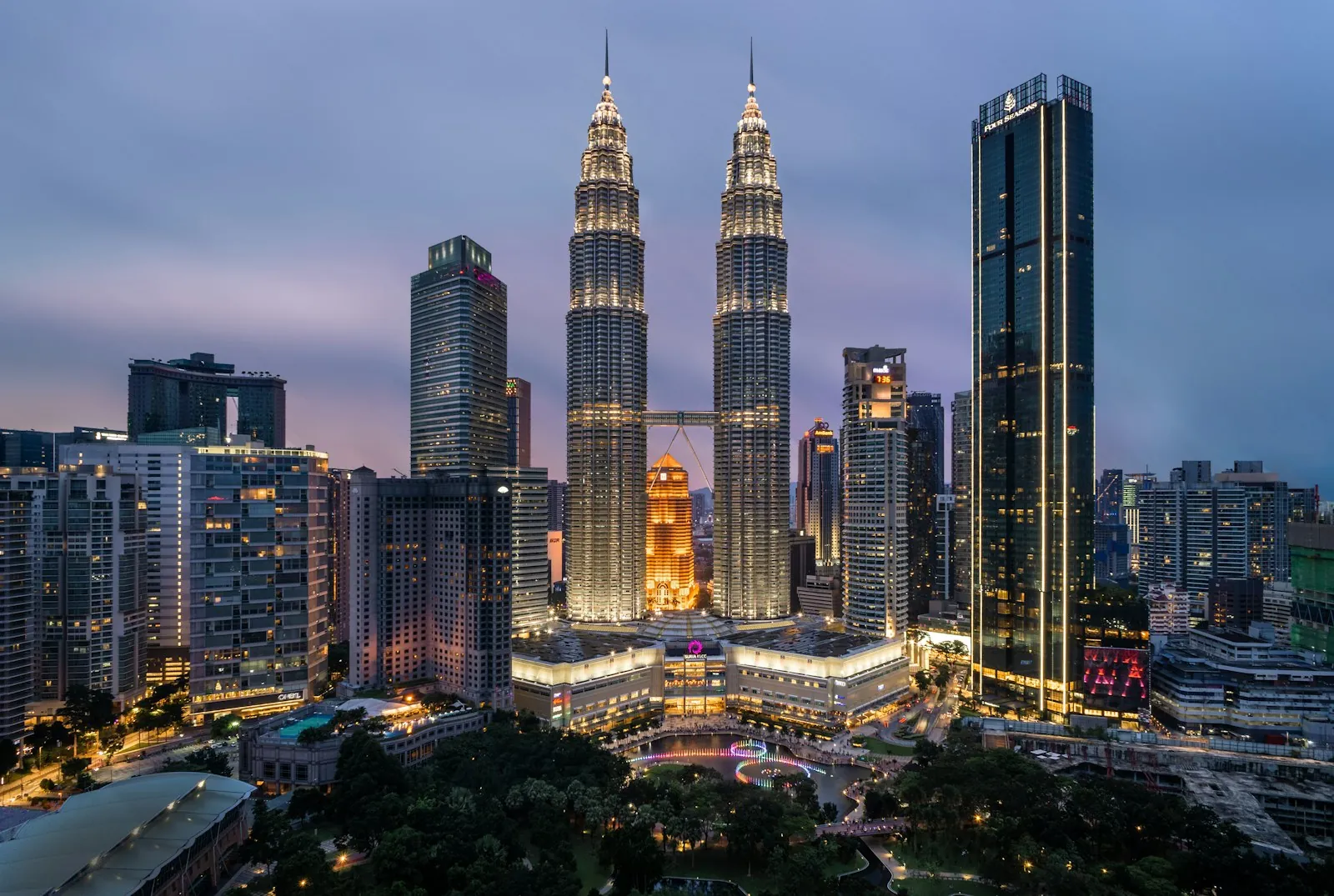
The short answer: Yes. Any non-citizen can apply to buy in Kuala Lumpur, with or without MM2H, as long as the purchase gets State Authority approval and clears KL’s foreign-buyer floor of roughly RM1,000,000. Under MM2H, property purchase is now compulsory across all four tiers — SEZ/SFZ, Silver, Gold and Platinum — with minimum prices from RM600,000 (Silver) up to RM2,000,000 (Platinum) and, for SEZ/SFZ, a Forest City home at a floor price set under Johor state policy; generally completed within 12 months of visa endorsement (before the pass is endorsed under the SEZ/SFZ route) and held for at least 10 years. Separately, Budget 2026 doubled stamp duty on residential transfers to foreign buyers from 4% to 8%, effective 1 January 2026 — so a RM1,000,000 KL condo now carries RM80,000 in stamp duty, not RM40,000.
MM2H has changed more in the last couple of years than in the fifteen years before them combined, and I've had more first conversations about it this year than about any other single topic. Buyers used to ask me about the fixed deposit and the visa length. Now the first question is almost always the same: "Do I actually have to buy a property?" The honest answer is yes — and that one change has reshaped how I advise every foreign client serious about Kuala Lumpur. This isn't an immigration guide; for that, go to the official MM2H portal. This is the practitioner's version — the numbers that matter once property is part of the plan, and the details I've watched clients get caught out by when nobody explained them in advance.
The four MM2H tiers in 2026
MM2H now runs four tiers, each with its own fixed deposit, visa length and property obligation. The newest is SEZ/SFZ, tied to Malaysia's Special Economic Zone framework; the other three — Silver, Gold and Platinum — are the tiers most buyers I speak with are choosing between.
| Tier | Fixed deposit | Visa length | Min. property price |
|---|---|---|---|
| SEZ/SFZ | USD65,000 (age 21–49) or USD32,000 (age 50+) | 10 years, renewable* | Forest City only, bought from the developer; floor price set under Johor state policy (check mm2h.gov.my) |
| Silver | USD150,000 | 5 years, renewable | RM600,000 |
| Gold | USD500,000 | 15 years | RM1,000,000 |
| Platinum | USD1,000,000 | 20 years | RM2,000,000 |
*SEZ/SFZ is Forest City-specific: the property must be a new unit bought directly from the developer (no resale or third-party purchases), bought before the MM2H pass is endorsed rather than within the standard 12 months after it, and up to 50% of the fixed deposit can be released to help fund it. Its visa term is 10 years, renewable, per mm2h.gov.my. Minimum entry age is 25 for the standard tiers. State governments can also set higher local minimum purchase prices for foreign buyers — on Penang Island it currently reaches RM3,000,000. Figures per mm2h.gov.my and corroborating industry sources; I verify the current numbers with each client before any offer is made.
Must you buy property under MM2H? Yes, in every tier
MM2H used to let you satisfy the programme with a fixed deposit alone, or hold other qualifying assets instead of real estate. That flexibility is gone. Every tier now requires an actual property purchase. For Silver, Gold and Platinum, that means completing within 12 months of your visa being endorsed — not 12 months from when you start thinking about it, so I encourage clients to start viewings early rather than treat the deadline as a soft one. The SEZ/SFZ route is tighter still: the home has to be bought before the pass is endorsed, and only in Forest City, new from the developer.
Once you've bought, the property generally has to be held for 10 years before you can sell it. There is one built-in exception: you're allowed to sell in order to upgrade to a higher-value property. What you can't do is buy under MM2H, hold for a couple of years, and cash out — the programme is now explicitly structured around a decade-long commitment to Malaysian real estate, not a visa shortcut.
In practice, this changes the order in which I encourage clients to work. Under the old rules, some buyers finalised their visa first and treated the property search as a formality to sort out later. With a hard 12-month clock now running from endorsement, that sequencing gets expensive fast — viewings, due diligence, financing and the sale and purchase agreement all take real time, and a rushed decision in month eleven is rarely the right one. I'd rather a client start looking seriously before the visa is even endorsed, so that by the time the clock starts, we already know roughly which enclave, which project, and which price band we're working in.
Stamp duty for foreigners buying property in Malaysia: 8% on homes from 1 January 2026
This one isn't an MM2H rule at all, and I mention it because clients regularly conflate the two. In Budget 2026, announced on 10 October 2025, the government doubled the flat stamp duty on residential property transfers to non-citizens (excluding permanent residents) and foreign-owned companies — from 4% to 8% — effective for any instrument of transfer executed on or after 1 January 2026. It's a flat rate, so it applies the same way regardless of the property's value, and it stacks on top of everything else in the purchase.
| RM1,000,000 KL condo | Before 2026 (4%) | From 1 Jan 2026 (8%) |
|---|---|---|
| Stamp duty on transfer | RM40,000 | RM80,000 |
For context on the policy direction: Malaysian first-time buyers get a 100% stamp duty exemption on homes up to RM500,000, and Budget 2027 proposes extending it to 2030 with partial relief up to RM750,000 (proposed, not yet gazetted; see my cost of buying a condo in KL breakdown). The gap between what a citizen and a foreign buyer pays on the same transaction is now wider than it's ever been.
Practically, this means the stamp duty line on a KL purchase has gone from a rounding error in most budgets to a genuine line item worth planning for months in advance, not discovering at the lawyer's office.
The fixed deposit was always the headline number. In 2026, it's the property purchase and the stamp duty that actually decide your budget.
What this means for a KLCC or Mont Kiara purchase
Kuala Lumpur is where most of my MM2H conversations end up, and the two rules above interact in a way worth spelling out. Separately from MM2H, Kuala Lumpur — along with Putrajaya and Labuan — has its own federal-territory floor for foreign buyers of roughly RM1,000,000, set by guidelines (foreign purchases also need approval under Section 433B of the National Land Code), and it applies to any foreign purchase there regardless of MM2H tier. That means a Silver-tier buyer, whose MM2H minimum is only RM600,000, is still shopping in the RM1,000,000+ band when the target is KLCC or Mont Kiara, because the KL floor overrides the lower MM2H figure. Gold and Platinum buyers clear it automatically, since their own minimums already sit at or above RM1,000,000.
Looking specifically at the city centre? See my guide to luxury condos in KLCC, and whether foreigners can buy freehold property in Malaysia.
Add the 8% stamp duty to that RM1,000,000+ starting point, and the all-in number for a foreign buyer looks meaningfully different from what it did a year ago. It doesn't make KL a poor choice — the enclaves that draw MM2H buyers still draw them for good reason — but it changes what "budget" means. I walk clients through the projects I currently represent, such as Armani Hallson and The Ritz-Carlton Residences in KLCC and the rest of my current projects, with this full picture in view: purchase price, minimum-price compliance, and the real stamp duty cost, not just the headline price on a listing.
The buyers I see doing this well tend to treat the 10-year hold as a feature rather than a constraint. If you're moving to KL under MM2H, you're presumably planning to actually live in the property, or at minimum hold it for the long term — so the enclaves worth focusing on are the ones with durable rental demand and resale liquidity, not just the ones with the flashiest brochure. That's a longer conversation than a blog post can cover properly, which is exactly why I'd rather have it with you directly than try to generalise it here.
Can foreigners buy property in KL without MM2H?
Yes. MM2H is a long-stay visa programme. It is not a licence to buy property. Any non-citizen can apply to buy in Kuala Lumpur, with or without MM2H, as long as the purchase gets State Authority approval under Section 433B of the National Land Code and clears KL's foreign-buyer floor of roughly RM1,000,000. Owning the property does not give you a visa.
The two systems run side by side. MM2H decides whether you can live here: you apply through a licensed MM2H agent, and the Immigration Department gives the final approval. The land rules decide whether you can buy: Section 433B says a non-citizen or a foreign company needs the State Authority's prior approval, and that approval can carry its own conditions and a levy. In MM2H, the property purchase is now a condition of the visa. Outside MM2H, buying is simply a property transaction, and it gives you no right to stay.
The costs are the same either way. A foreign buyer, meaning a non-citizen who is not a permanent resident, or a foreign company, pays the flat 8% stamp duty on the transfer of a residential home. That rate came in with Budget 2026, for transfers executed from 1 January 2026. Holding an MM2H pass does not change it.
Can a foreigner get a home loan in Malaysia?
Yes, the rules allow it, but the bank decides. Bank Negara's foreign exchange rules let a non-resident borrow ringgit, in any amount, from a Malaysian resident lender to buy a residential or commercial property. How much any one bank will actually lend, and on what terms, is that bank's own credit decision. Get an indicative approval before you book a unit.
The permission comes from Bank Negara's Foreign Exchange Policy Notices. Notice 2 allows a non-resident to borrow ringgit “in any amount from a Resident to finance Real Sector Activity in Malaysia”. Bank Negara defines that activity to include the purchase of a residential or commercial property. It excludes buying land that will not be built on or used to produce goods or services, so a bare plot held as an investment does not qualify.
What the rules do not do is promise a loan. Lenders tend to offer foreign buyers a smaller share of the price than a Malaysian borrower would get, and the terms vary from bank to bank. In my KL buying-cost breakdown I work on a 70% loan as an assumption, not a rule. One rule does apply to everyone, local or foreign: since 2010, Bank Negara has capped a borrower's third housing loan at 70% of the property's value.
Can foreigners buy property in KL for less than RM1 million?
Generally, no. Kuala Lumpur, along with Putrajaya and Labuan, has a foreign-buyer floor of roughly RM1,000,000, set by federal-territory guidelines. It applies to every foreign purchase, MM2H or not. An MM2H Silver buyer whose own programme minimum is RM600,000 still needs a KL property at or above the KL floor.
Two separate minimums apply, and the higher one wins. MM2H sets its own minimum by tier: RM600,000 for Silver, RM1,000,000 for Gold and RM2,000,000 for Platinum. The location sets another. Each state and federal territory sets its own threshold, and every foreign purchase also needs State Authority approval under Section 433B of the National Land Code. Thresholds change, so confirm the current KL figure with a conveyancing lawyer before you shortlist.
How I help MM2H buyers
I'm not an immigration consultant, and I don't process MM2H applications — I represent buyers on the property side of the decision. That means helping you find something that genuinely satisfies the tier minimum and the state floor, running the real numbers including stamp duty before you fall in love with a unit, and being straightforward when a property doesn't make sense for your situation. Most of my MM2H conversations start on WhatsApp, with a straightforward question, and go from there at whatever pace suits you.
Frequently asked questions
Must I buy property under MM2H 2026?
Yes. As of 2026, property purchase is compulsory across all four MM2H tiers — SEZ/SFZ, Silver, Gold and Platinum. Silver, Gold and Platinum buyers have 12 months from visa endorsement to complete the purchase; under the SEZ/SFZ route the home has to be bought before the pass is endorsed. The property must generally be held for at least 10 years, though upgrading to a higher-value property is allowed.
Is there a minimum property price for foreigners in Kuala Lumpur?
Yes. Kuala Lumpur — along with Putrajaya and Labuan — has its own federal-territory floor for foreign buyers of roughly RM1,000,000, set by federal-territory guidelines. Foreign purchases also need approval under Section 433B of the National Land Code. It applies to any foreign purchase there regardless of MM2H tier, so a Silver-tier buyer whose MM2H minimum is RM600,000 is still shopping in the RM1,000,000+ band when the target is KLCC or Mont Kiara. State minimums elsewhere are set separately.
What is the MM2H minimum property price for each tier?
Minimum purchase prices are RM600,000 for Silver, RM1,000,000 for Gold and RM2,000,000 for Platinum. The SEZ/SFZ route is different: it requires a Forest City home bought new from the developer, with the floor price set under Johor state policy (check mm2h.gov.my for current terms). Some states set higher local minimums for foreign buyers — up to RM3,000,000 on Penang Island. Kuala Lumpur also has its own separate foreign-ownership floor of around RM1,000,000, set by federal-territory guidelines (with State Authority approval required under Section 433B of the National Land Code), which applies on top of the MM2H minimum — so Silver-tier buyers targeting KL should budget for RM1,000,000, not RM600,000.
Can I sell the property I bought under MM2H?
Not for the first 10 years, with one exception: you're allowed to sell in order to upgrade to a higher-value property. Outside of that, the property must be held for the full 10-year period under your MM2H visa.
How much stamp duty do foreigners pay in 2026?
Since 1 January 2026, the flat stamp duty on residential property transfers to non-citizens (excluding permanent residents) and foreign-owned companies is 8%, up from 4% — a change from Budget 2026. It applies regardless of the property's value, so a RM1,000,000 KL condo now carries RM80,000 in stamp duty instead of RM40,000.
Can foreigners buy property in Malaysia without MM2H?
Yes. MM2H is a long-stay visa programme, not a licence to buy property. Any non-citizen can apply to buy in Kuala Lumpur, with State Authority approval under Section 433B of the National Land Code, subject to KL's foreign-buyer floor of roughly RM1,000,000. Buying property does not give you a visa, and foreign buyers pay the 8% stamp duty on homes either way.
Can a foreigner get a home loan in Malaysia?
Yes, the rules allow it. Bank Negara's Foreign Exchange Policy Notices let a non-resident borrow ringgit in any amount from a Malaysian resident lender to buy a residential or commercial property, though not land that will not be built on. Each bank decides how much it will lend and on what terms, so get an indicative approval before you commit.
Can foreigners buy property under RM1 million in KL?
Generally, no. Kuala Lumpur, along with Putrajaya and Labuan, has a foreign-buyer floor of roughly RM1,000,000, set by federal-territory guidelines. It applies whether or not you hold MM2H, so a Silver-tier buyer whose MM2H minimum is RM600,000 still needs a KL property at or above that floor. Confirm the current figure with a conveyancing lawyer.
Figures current as of July 2026, sourced from mm2h.gov.my and Budget 2026 announcements. This is not immigration or legal advice — verify current requirements with official MM2H channels or a licensed immigration consultant before making any decision.

Fabian George
REN 48869 — a Real Estate Negotiator registered with BOVAEP through Prestige Realty, Kuala Lumpur, after passing the NCC course. Kýros Maison is my practice.
I represent buyers across KLCC, Bangsar, Bandar Sri Damansara and Semenyih, and write these guides from the questions clients actually ask me. See the projects I represent.